
Carbon Project Development
End-to-end carbon-credit project development: eligibility, registration, MRV and monetisation for renewable-energy and sustainability projects.

Product Overview
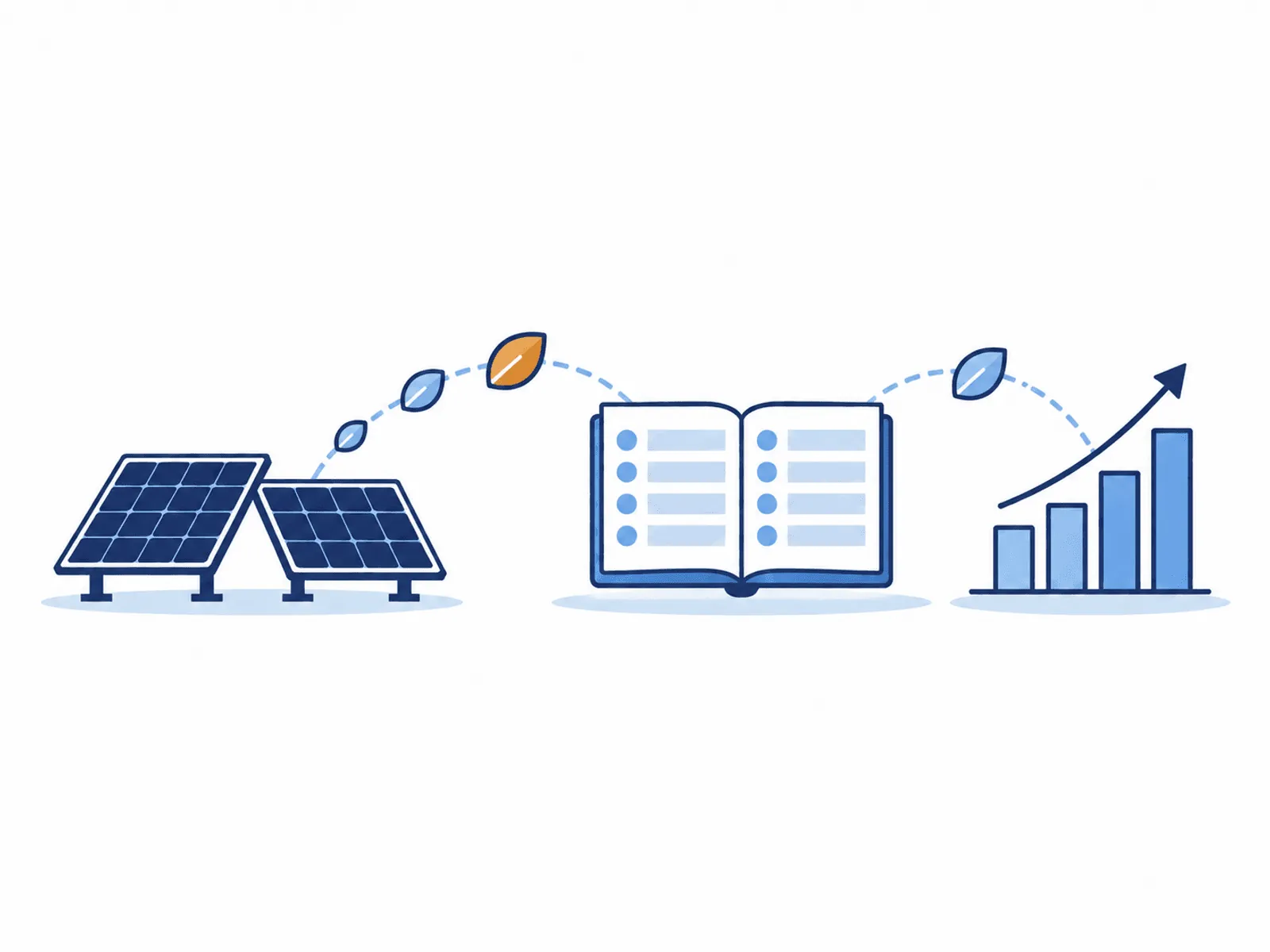
Carbon Project Development is Aumplus Power's advisory and execution service for turning a qualifying emission-reduction activity into issued, saleable carbon credits. It covers the full lifecycle: screening a project for eligibility, selecting the standard and methodology, preparing the project design document, taking the project through validation and registration, running monitoring and verification, and supporting the sale of the resulting credits. The work is document- and process-driven rather than equipment-based.
For an organisation evaluating Carbon Project Development, the key question is whether the activity is genuinely additional, measurable and eligible under a recognised standard, and whether the expected credit revenue justifies the registration and verification effort. Aumplus can assess this early so time and cost go into projects with a realistic path to issuance.
Why This Solution Matters
Well-run renewable-energy, energy-efficiency, biogas, afforestation and similar projects can generate carbon credits that are sold in voluntary markets or used under compliance schemes such as India's Carbon Credit Trading Scheme (CCTS). Done properly, this adds a revenue stream to a project that already stands on its own. Done poorly, projects fail validation or under-issue because the baseline, additionality or monitoring was not set up correctly.
The value of Carbon Project Development is therefore in getting the methodology, documentation and monitoring right the first time, so credits are issued on schedule, hold their value with buyers, and withstand third-party verification.
Core Value Proposition
- Early eligibility and additionality screening before any registration cost is committed.
- Standard and methodology selection, voluntary (e.g. Verra VCS, Gold Standard) or India's CCTS compliance market, matched to the project type.
- Preparation of the project design document, baseline assessment and emission-reduction estimate.
- Management of validation, registration and periodic verification with the accredited third party.
- Ongoing MRV (monitoring, reporting and verification) and support for the sale or trading of issued credits.
Who Can Benefit
Carbon Project Development can be relevant to renewable-energy developers, industrial and commercial energy users, EPC firms, agricultural and forestry operators, waste and biogas projects, and institutions running efficiency or fuel-switch programmes. Whether a project qualifies depends on the activity type, its baseline, when it started, its scale, and the availability of an approved methodology.
Typical Applications
- Solar, Wind & Hybrid Generation Projects
- Energy-Efficiency & Fuel-Switch Programmes
- Biogas, Biomass & Waste-to-Energy Projects
- Afforestation, Reforestation & Agri-Based Sequestration
How Aumplus Approaches the Project
Aumplus begins with a feasibility screen: what the activity is, when it started, its baseline emissions, whether it meets additionality tests, and which standard and methodology fit. This produces an indicative credit volume, a timeline to first issuance, and an estimate of registration and verification cost so the client can make an informed go/no-go decision.
Once a project proceeds, Aumplus prepares the project design document and supporting evidence, coordinates validation and registration, sets up the monitoring plan and data systems, manages periodic verification, and then supports the client in placing the issued credits with buyers or on a trading platform.
Implementation Considerations
- Project start date and evidence of prior consideration of carbon revenue (additionality).
- Availability of an approved methodology for the activity and its scale.
- Choice of standard (voluntary market versus CCTS compliance) and its buyer base.
- Quality and completeness of baseline and monitoring data.
- Registration, validation and periodic verification fees, and their timing against credit revenue.
- Crediting period, monitoring frequency and long-term data-collection responsibilities.
- Applicable national rules, corresponding-adjustment and double-counting requirements.
Integration With Other Solutions
Carbon Project Development works alongside the rest of the Aumplus portfolio: a solar plant, BESS, EV-charging or efficiency project delivered by Aumplus can be structured from the outset to preserve its carbon eligibility, with monitoring data captured through the same AI-driven monitoring platform used to run the asset. Aumplus can advise on the whole picture rather than treating the carbon workstream in isolation.
Key Benefits
- Adds a carbon-credit revenue stream to projects that are already viable on their own.
- Reduces the risk of failed validation or under-issuance through correct methodology and baseline work.
- Single point of coordination across standard bodies, validators and verifiers.
- Monitoring set up to survive third-party verification and retain buyer confidence.
- Support continues through issuance and into the sale or trading of credits.
Frequently Asked Questions
The full lifecycle of a carbon-credit project: eligibility and additionality screening, standard and methodology selection, project design document preparation, validation and registration, monitoring and verification (MRV), and support for selling the issued credits.
Voluntary-market standards such as Verra VCS and Gold Standard, as well as India's Carbon Credit Trading Scheme (CCTS) compliance market. The right route depends on the project type, scale and target buyers.
Renewable-energy generation, energy efficiency and fuel switching, biogas and waste-to-energy, and afforestation or agri-based sequestration are common categories, subject to an approved methodology and a demonstrable baseline.
It varies by standard and project, but registration and first verification typically take several months to over a year. Aumplus provides an indicative timeline during the feasibility screen.
A project is additional if the emission reductions would not have happened without the carbon revenue. Standards require this to be demonstrated; projects that cannot show it are not eligible.
Share the activity, its location and scale, and its start date (or planned date) with Aumplus. The team will run a feasibility screen and set out the route, credit potential, timeline and cost.
Variants

Feasibility & Eligibility Screen
Additionality & methodology

Registration & MRV
Validation, registration, verification

Credit Sale & Trading Desk
Offtake & trading
Ready to explore Carbon Project Development? Contact Aumplus Power with your project type, location and start date, and the team will screen it for carbon-credit eligibility.
Contact Us